
The Integrity of
At Incheon Quant Labs, we recognize that the most sophisticated trading algorithms are only as reliable as the data they consume. Our methodology is built on a foundation of rigorous empirical validation and noise elimination.
Phase I: Forensic Data Cleaning
Raw market data is notoriously fragmented. Our first layer of defense involves a multi-step purification process to ensure our quant labs operate on ground-truth reality rather than exchange artifacts.
Outlier Detection & Repair
We employ statistical hammers to identify "bad ticks" — price jumps that exist in data feeds but never occurred in the physical matching engine. By comparing three disparate data providers, we filter out synthetic volatility that triggers false positives in trading signals.

Latency-Adjusted Modeling
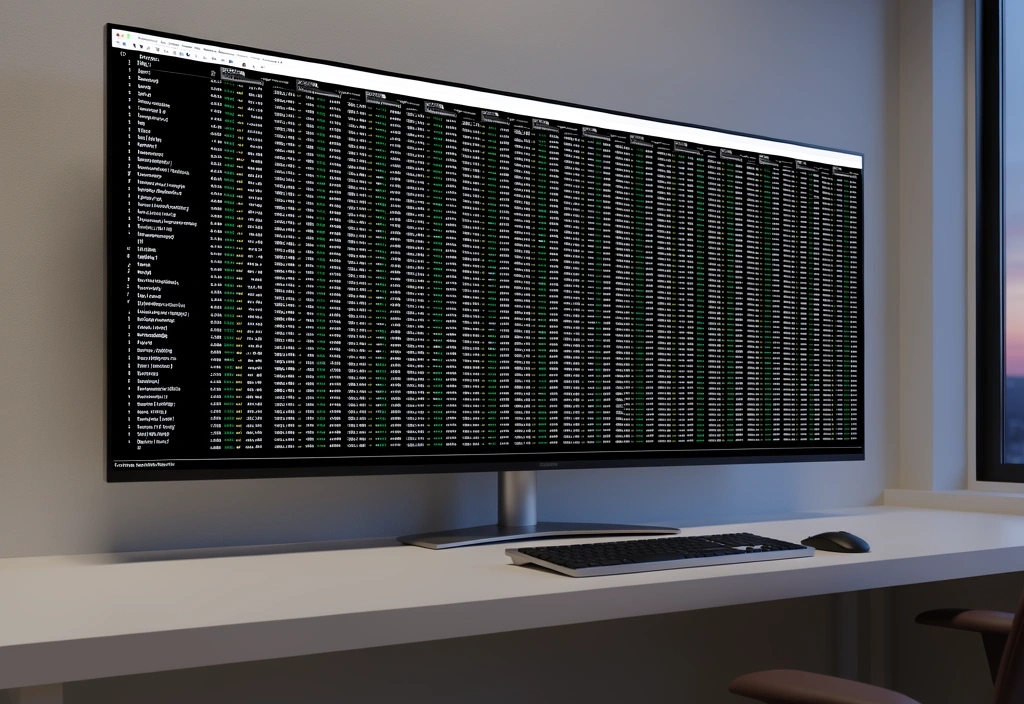
Our backtesting engine simulates real-world execution by introducing artificial slippage and "look-ahead" prevention protocols. We assume the worst-case fill price to ensure that a strategy’s theoretical alpha survives the friction of the global markets.
Cross-Validation & Stress Testing
A strategy that works in a vacuum is a liability. Our quant labs subject every model to a battery of out-of-sample tests and Monte Carlo simulations to prove robustness.
Walk-Forward Analysis
We avoid "overfitting" by optimizing parameters on a training set and verifying them on a strictly sequestered validation set. This avoids the common trap of "curve fitting" to historical noise.
Monte Carlo Rigor
By shuffling the order of historical trade returns 10,000 times, we determine the statistical probability of maximum drawdown. We only deploy systems with a 95% confidence interval for risk threshold adherence.
Regime Detection
Is the market trending or mean-reverting? Our trading systems utilize Hidden Markov Models (HMM) to identify structural shifts in volatility and adjust leverage automatically.

Global Standard, Local Precision.
Operating from Incheon, South Korea, places us at a unique intersection of Western financial theory and Asian technological speed. Our methodology incorporates specific insights from the KRX and regional derivatives markets, balanced against global liquidity standards.
We maintain a strict "Code-as-Truth" policy. Documentation is not an afterthought; it is baked into our repository structure via automated testing suites that verify logic before a single line of code interacts with live capital.
- ISO-inspired documentation protocols
- Distributed ledger data verification
- Real-time risk feedback loops
Technical Audit Review
Registered partners can request a detailed White Paper on our specific Bayesian optimization methods and data-set provenance.
Methodology FAQ
How do you handle flash-crash anomalies in historical data?
We treat flash crashes as high-alpha opportunities but also significant risk vectors. Our methodology includes a "synthetic volatility injection" during backtests to see if our execution logic handles liquidity gaps without catastrophic failure.
Does your research cover HFT or swing trading?
While our proprietary trading models operate across multiple timeframes, our core research expertise at the quant labs is focused on intraday mean reversion and medium-term trend following where statistical significance is highest.
What is your stance on black-box modeling?
We reject the "black box" philosophy. Every weight and decision point in our neural networks must be explainable via SHAP values or similar interpretability frameworks. If we cannot explain why a trade was taken, the system does not go to production.
Ready to evaluate our systems?
Our team is available for deep-dive consultations regarding our current model performance and licensing opportunities.